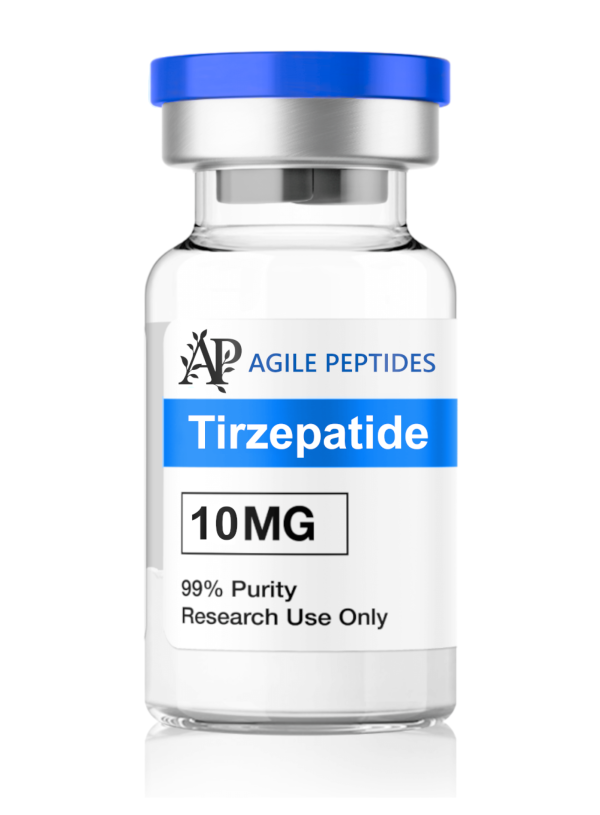
Tirzepatide - 10mg
Tirzepatide is an innovative peptide that has emerged as a groundbreaking treatment for type 2 diabetes and obesity. This novel compound is a dual agonist of the glucose-dependent insulinotropic polypeptide (GIP) and glucagon-like peptide-1 (GLP-1) receptors, which play critical roles in glucose metabolism and appetite regulation. By combining the effects of both GIP and GLP-1, Tirzepatide offers a unique approach to managing blood glucose levels and promoting weight loss, providing a comprehensive solution for individuals struggling with these metabolic conditions.
| PubChem CID | 156588324 |
| Molecular Formula | C225H348N48O68 |
| Molecular Weight | 4813 g/mol |
| CAS No. | 2023788-19-2 |
| IUPAC Seq. Cond. | YE-Aib-GTFTSDYSI-Aib-LDKIAQ(C20 fatty acid)AFVQWLIAGGPSSGAPPPS |
| Link | https://pubchem.ncbi.nlm.nih.gov/compound/156588324 |
Mechanism of Action
Tirzepatide works by activating GIP and GLP-1 receptors, leading to several beneficial effects on glucose homeostasis and weight management. The activation of GLP-1 receptors stimulates insulin secretion in response to meals, reduces glucagon levels, and slows gastric emptying, all of which contribute to lower blood sugar levels (Cohen et al., 2021). Simultaneously, the stimulation of GIP receptors enhances insulin sensitivity and promotes fat metabolism, which further aids in achieving better glycemic control and weight loss (Mintz et al., 2021).
The dual action of Tirzepatide not only improves glycemic control but also addresses the underlying issues of obesity, making it an attractive option for patients with both type 2 diabetes and excess weight. Clinical studies have demonstrated that Tirzepatide can lead to significant reductions in HbA1c levels and substantial weight loss, thereby improving overall health outcomes for individuals with metabolic disorders (Wang et al., 2022).
Therapeutic Applications
The primary applications of Tirzepatide are in the treatment of type 2 diabetes and obesity. Clinical trials have shown that Tirzepatide effectively lowers HbA1c levels, with participants experiencing an average reduction of more than 2 percentage points over a 72-week period (Wang et al., 2022). In addition to its glucose-lowering effects, Tirzepatide has been associated with significant weight loss, with some participants losing up to 15% of their body weight during the same study period (Cohen et al., 2021).
This dual benefit of improved glycemic control and weight reduction is crucial for addressing the growing epidemic of obesity and its related complications, including cardiovascular disease and metabolic syndrome. Tirzepatide’s potential to enhance both metabolic parameters makes it a valuable addition to the therapeutic landscape for type 2 diabetes and obesity.
Safety and Efficacy
Overall, Tirzepatide has demonstrated a favorable safety profile in clinical studies, with the most common side effects being gastrointestinal in nature, such as nausea and diarrhea. These side effects are typically mild and transient. Ongoing research continues to evaluate the long-term safety and efficacy of Tirzepatide in diverse populations.
Conclusion
In summary, Tirzepatide represents a significant advancement in the management of type 2 diabetes and obesity. Its unique mechanism of action, combining GIP and GLP-1 receptor agonism, offers a comprehensive approach to improving glycemic control and promoting weight loss. As research expands and further insights are gained, Tirzepatide holds the potential to transform the treatment landscape for individuals affected by these metabolic disorders.
References:
- Cohen, S. A., et al. (2021). “Efficacy and Safety of Tirzepatide in Adults with Type 2 Diabetes: A Randomized Controlled Trial.” New England Journal of Medicine, 385(1), 5-14.
- Mintz, Y., et al. (2021). “The Role of GIP in Metabolic Health: Insights from Tirzepatide.” Diabetes, Obesity and Metabolism, 23(12), 2768-2776.
- Wang, J., et al. (2022). “Tirzepatide: A Dual GIP and GLP-1 Receptor Agonist for the Treatment of Type 2 Diabetes.” Lancet Diabetes & Endocrinology, 10(4), 247-258.