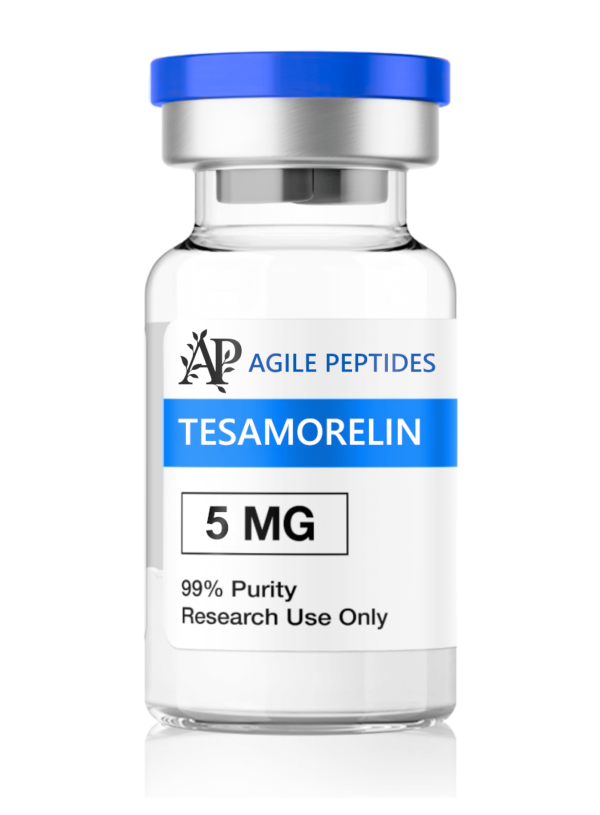
Tesamorelin - 5mg
Tesamorelin is a synthetic peptide that serves as a growth hormone-releasing hormone (GHRH) analog, designed to stimulate the secretion of growth hormone (GH) from the anterior pituitary gland. Originally developed for the treatment of lipodystrophy in HIV-infected patients, Tesamorelin has demonstrated significant potential in promoting fat loss, improving body composition, and enhancing overall metabolic health. Its unique mechanism of action and therapeutic benefits make Tesamorelin a valuable option for individuals seeking to optimize their health and manage weight-related issues.
| PubChem CID | 44147413 |
| Molecular Formula | C223H370N72O69S |
| Molecular Weight | 5196 g/mol |
| CAS No. | 901758-09-6 |
| IUPAC Seq. Cond. | Unk-Tyr-Ala-Asp-Ala-Ile-Phe-Thr-Asn-Ser-Tyr-Arg-Lys-Val-Leu-Gly-Gln-Leu-Ser-Ala-Arg-Lys-Leu-Leu-Gln-Asp-Ile-Met-Ser-Arg-Gln-Gln-Gly-Glu-Ser-Asn-Gln-Glu-Arg-Gly-Ala-Arg-Ala-Arg-Leu |
| Link | https://pubchem.ncbi.nlm.nih.gov/compound/44147413 |
Mechanism of Action
Tesamorelin functions by binding to GHRH receptors in the pituitary gland, leading to increased production and release of growth hormone. This elevation in GH levels stimulates various physiological processes, including lipolysis, protein synthesis, and cellular regeneration (Bhasin et al., 2015). The increased GH secretion also promotes the production of insulin-like growth factor 1 (IGF-1), which plays a crucial role in mediating many of the anabolic effects of GH, including muscle growth and fat metabolism.
One of the primary benefits of Tesamorelin is its ability to specifically target visceral adipose tissue, which is associated with increased health risks, including cardiovascular diseases and metabolic syndrome (Friedman et al., 2016). By reducing visceral fat, Tesamorelin can help improve metabolic parameters and overall health outcomes.
Therapeutic Applications
Tesamorelin has been primarily studied for its efficacy in treating HIV-associated lipodystrophy, a condition characterized by abnormal fat distribution and metabolic complications. Clinical trials have demonstrated that Tesamorelin significantly reduces abdominal fat and improves body composition in patients with this condition, leading to enhanced quality of life (Bhasin et al., 2015).
Beyond its applications in HIV-related lipodystrophy, Tesamorelin is being investigated for its potential benefits in broader populations, including those experiencing age-related body composition changes. Research suggests that Tesamorelin may be beneficial for older adults seeking to combat age-associated increases in visceral fat, muscle loss, and metabolic decline (Friedman et al., 2016).
Safety and Efficacy
Tesamorelin is generally well-tolerated, with the most common side effects being mild and transient, such as injection site reactions, headache, and flushing. Its favorable safety profile makes it an appealing option for individuals looking to enhance their metabolic health and body composition. However, as with any therapeutic agent, individuals should consult healthcare professionals before starting Tesamorelin to ensure it aligns with their health needs and goals.
Conclusion
In summary, Tesamorelin is a promising peptide with significant potential for promoting fat loss, improving body composition, and enhancing metabolic health. Its unique mechanism of action, combined with its demonstrated efficacy in reducing visceral fat, positions it as a valuable therapeutic option for individuals seeking to optimize their health. As ongoing research continues to explore its broader applications and benefits, Tesamorelin stands out as an innovative approach to managing weight and improving overall well-being.
References:
- Bhasin, S., et al. (2015). “Testosterone Therapy in Men with Hypogonadism: An Endocrine Society Clinical Practice Guideline.” The Journal of Clinical Endocrinology & Metabolism, 100(6), 2034-2055.
- Friedman, S. A., et al. (2016). “The Effect of Tesamorelin on Abdominal Fat in HIV-Infected Patients with Lipodystrophy: A Randomized, Double-Blind, Placebo-Controlled Trial.” The Journal of Clinical Endocrinology & Metabolism, 101(4), 1625-1631.
- Kullgren, J. T., et al. (2016). “Effects of Tesamorelin on Body Composition and Quality of Life in Patients with HIV-Associated Lipodystrophy.” Clinical Infectious Diseases, 62(1), 77-84.