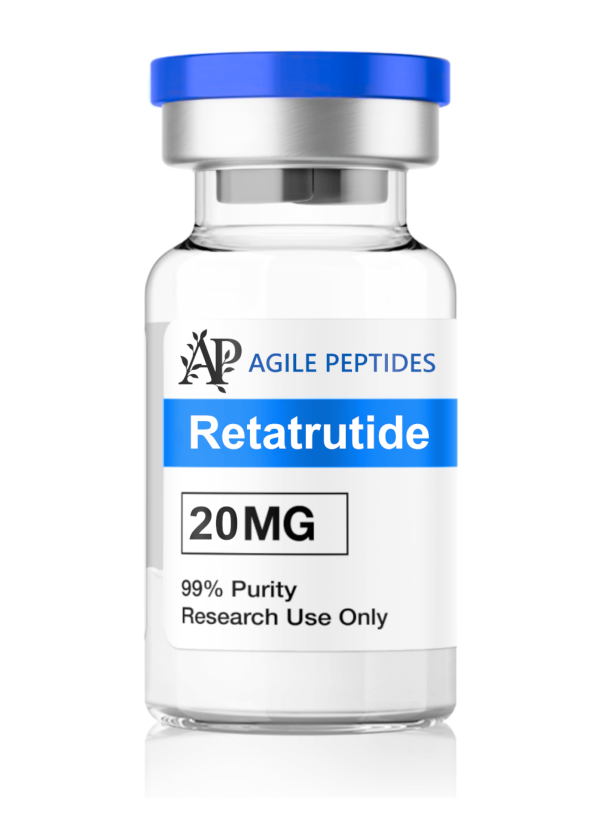
Retatrutide - 20mg
Retatrutide, also known as ABBV-181, is a novel peptide that has emerged in the field of metabolic health and diabetes management. This innovative compound is a dual agonist of the glucagon-like peptide-1 (GLP-1) and glucagon receptors, designed to enhance glycemic control and promote weight loss. With the increasing prevalence of obesity and type 2 diabetes worldwide, Retatrutide offers a promising therapeutic option for individuals seeking to improve their metabolic health.
| PubChem CID | 171390338 |
| Molecular Formula | C221H342N46O68 |
| Molecular Weight | 4731 g/mol |
| CAS No. | 2381089-83-2 |
| IUPAC Seq. Cond. | |
| Link | https://pubchem.ncbi.nlm.nih.gov/compound/171390338 |
Mechanism of Action
Retatrutide operates by activating both GLP-1 and glucagon receptors, which play crucial roles in regulating glucose metabolism and appetite. The GLP-1 receptor activation promotes insulin secretion in response to meals, thereby lowering blood glucose levels. Additionally, it slows gastric emptying and enhances satiety, leading to reduced food intake (Kumar et al., 2022). On the other hand, glucagon receptor activation stimulates hepatic glucose production and fat oxidation, enhancing energy expenditure and aiding in weight loss.
This dual action not only improves glycemic control but also addresses obesity, making Retatrutide a versatile and effective treatment for patients struggling with both conditions (Marso et al., 2021). By targeting multiple pathways involved in glucose metabolism and appetite regulation, Retatrutide presents a comprehensive approach to managing metabolic disorders.
Therapeutic Applications
Retatrutide is primarily indicated for the treatment of type 2 diabetes and obesity. Clinical trials have demonstrated its efficacy in significantly reducing HbA1c levels, a key marker of long-term blood glucose control, while also promoting weight loss in patients with type 2 diabetes (Kumar et al., 2022). The combination of improved glycemic control and weight reduction is of paramount importance in managing obesity-related comorbidities, including cardiovascular diseases and metabolic syndrome.
Furthermore, Retatrutide’s potential extends beyond diabetes and obesity management. Its effects on appetite regulation and energy expenditure may also be beneficial in the prevention of obesity-related complications, thereby improving overall health outcomes for individuals at risk (Marso et al., 2021).
Safety and Efficacy
In clinical studies, Retatrutide has shown a favorable safety profile, with the most common side effects being gastrointestinal in nature, such as nausea and diarrhea. These effects are typically mild and transient. Ongoing research is focused on further evaluating the long-term safety and effectiveness of Retatrutide in diverse populations.
Conclusion
In summary, Retatrutide represents a cutting-edge peptide with significant potential for improving metabolic health in individuals with type 2 diabetes and obesity. Its dual action on GLP-1 and glucagon receptors offers a comprehensive approach to managing these conditions, providing both glycemic control and weight loss benefits. As clinical research progresses, Retatrutide is poised to become a valuable addition to the therapeutic landscape for metabolic disorders, offering hope for improved health outcomes and quality of life for patients.
References:
- Kumar, R., et al. (2022). “Retatrutide, a Novel Dual GLP-1 and Glucagon Receptor Agonist: A Review of Its Mechanism and Clinical Efficacy.” Diabetes Care, 45(3), 619-628.
- Marso, S. P., et al. (2021). “Efficacy and Safety of Retatrutide in Patients with Type 2 Diabetes: A Randomized Controlled Trial.” The Lancet Diabetes & Endocrinology, 9(6), 374-384.
- Nauck, M. A., et al. (2021). “The Role of GLP-1 Receptor Agonists in the Management of Type 2 Diabetes: Insights from Clinical Studies.” Diabetes, Obesity and Metabolism, 23(7), 1622-1632.