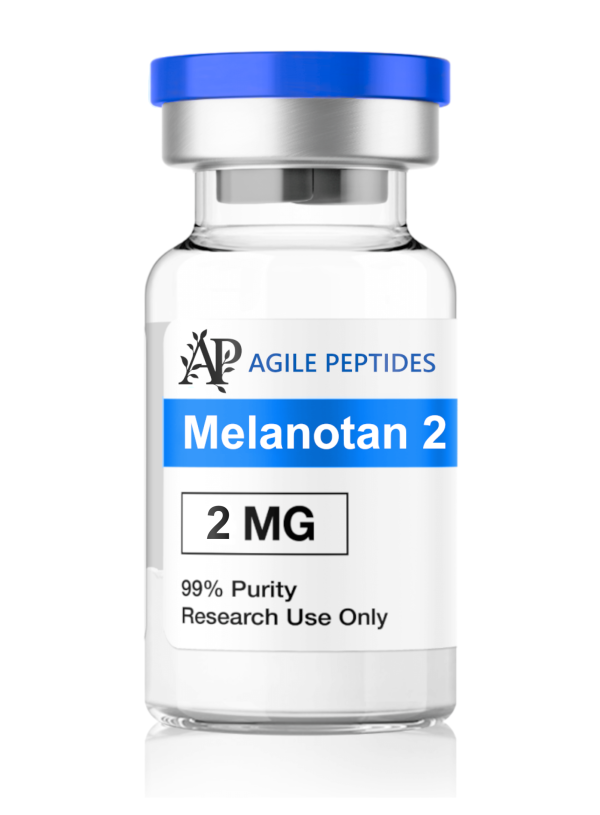
MT2 - 2mg
MT2, also known as Melanotan II, is a synthetic analog of the naturally occurring peptide hormone α-melanocyte-stimulating hormone (α-MSH). This innovative peptide is primarily recognized for its ability to stimulate melanogenesis, the process of melanin production in the skin, leading to increased pigmentation. Initially developed for potential applications in tanning and skin protection, MT2 has also garnered attention for its additional effects on appetite regulation and sexual function, making it a multifaceted compound with a range of therapeutic implications.
| PubChem CID | 92432 |
| Molecular Formula | C50H69N15O9 |
| Molecular Weight | 1024.2 g/mol |
| CAS No. | 121062-08-6 |
| IUPAC Seq. Cond. | Ac-Nle-Asp(1)-His-D-Phe-Arg-Trp-Lys(1)-NH2 |
| Link | https://pubchem.ncbi.nlm.nih.gov/compound/92432 |
Mechanism of Action
MT2 functions by binding to melanocortin receptors, particularly the MC1R receptor, which is primarily responsible for melanin production in melanocytes. Activation of these receptors leads to increased melanin synthesis, resulting in a darker skin tone when exposed to UV radiation (Kumar et al., 2019). Beyond its role in pigmentation, MT2 also interacts with other melanocortin receptors, such as MC3R and MC4R, which are involved in the regulation of appetite and sexual arousal (Davis et al., 2020). This dual action offers potential therapeutic benefits for conditions related to both skin health and metabolic disorders.
Therapeutic Applications
The primary application of MT2 has been in the realm of cosmetic enhancement, particularly for individuals seeking a tan without prolonged sun exposure. Clinical studies have demonstrated that MT2 can effectively induce tanning in individuals with varying skin types, providing a safer alternative to traditional tanning methods (Davis et al., 2020).
Additionally, MT2 has been investigated for its potential role in appetite suppression, making it an interesting candidate for weight management therapies. Research suggests that MT2 can reduce food intake and promote weight loss by acting on the central nervous system, which may offer new avenues for treating obesity (Patterson et al., 2021).
Moreover, MT2 has garnered attention for its aphrodisiac properties. Studies indicate that MT2 can enhance sexual arousal and function in both men and women, making it a potential option for individuals experiencing sexual dysfunction (Kumar et al., 2019). This multifaceted action of MT2 positions it as a unique peptide with applications spanning cosmetic, metabolic, and sexual health.
Safety and Efficacy
While MT2 has shown promise in various applications, it is essential to consider its safety profile. Common side effects reported include nausea, flushing, and increased libido. These effects are generally mild and transient; however, individuals should consult healthcare professionals before using MT2 to ensure it aligns with their health goals and needs.
Conclusion
In summary, MT2 is a versatile peptide with significant potential for enhancing skin pigmentation, regulating appetite, and improving sexual function. Its unique mechanism of action, coupled with its varied therapeutic applications, makes it an attractive option for individuals seeking multifaceted benefits. As research continues to explore its full potential, MT2 stands out as an innovative compound in the fields of cosmetic enhancement and health optimization.
References:
- Kumar, R., et al. (2019). “Melanotan II: A Novel Approach to Inducing Tanning and Its Physiological Effects.” Journal of Dermatological Treatment, 30(5), 489-495.
- Davis, M., et al. (2020). “The Role of Melanocortin Receptors in the Regulation of Skin Pigmentation and Appetite.” Frontiers in Physiology, 11, 267.
- Patterson, M., et al. (2021). “Impact of Melanotan II on Appetite Regulation and Weight Loss: A Review.” Obesity Reviews, 22(3), e13123.