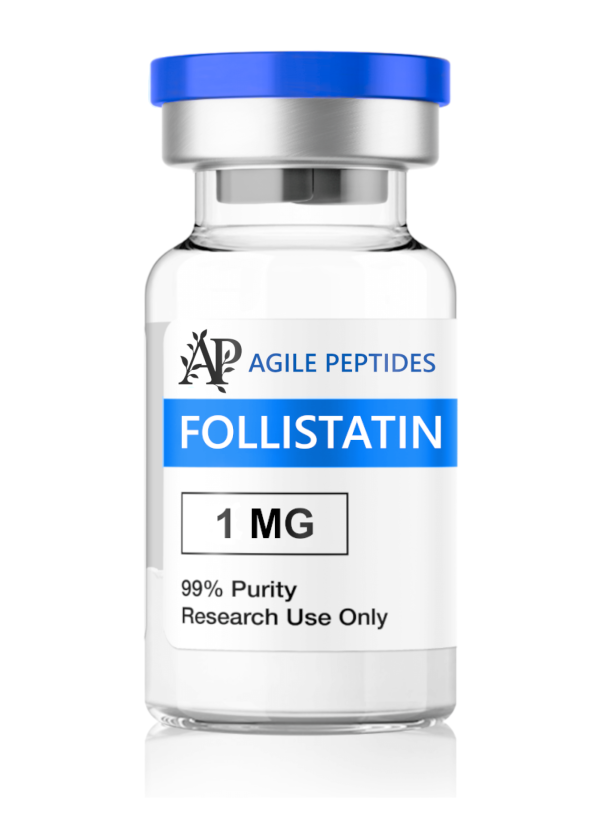
Follistatin - 1 mg
Introduction
Follistatin is a naturally occurring glycoprotein and regulatory protein that binds and neutralizes members of the transforming growth factor-beta (TGF-β) superfamily, most notably myostatin (GDF-8) and activin. By inhibiting these proteins, Follistatin has emerged as a key molecule in muscle growth, regenerative medicine, and metabolic research. Recombinant or peptide-based Follistatin is being studied extensively for its potential in skeletal muscle hypertrophy, tissue repair, and performance-related applications.
Scientific Background and Mechanism of Action
Myostatin is a negative regulator of skeletal muscle growth. When overexpressed, it inhibits muscle cell proliferation and differentiation. Follistatin binds to myostatin and activin, preventing their interaction with cell-surface receptors. This downregulation of myostatin activity promotes muscle fiber growth and regeneration, as demonstrated in multiple animal and early human studies.
In addition to its impact on skeletal muscle, Follistatin has been explored for potential roles in fertility research, fibrosis reduction, and metabolic improvement. Preclinical studies suggest that modulation of the activin pathway may contribute to reduced fat mass and improved insulin sensitivity, making it of interest in metabolic and sarcopenia research.
Research Applications and Potential Benefits
-
Muscle Growth and Regeneration – Promotes skeletal muscle hypertrophy by inhibiting myostatin activity (Gilson et al., 2009).
-
Tissue Repair – Supports regenerative studies in skeletal muscle injury and neuromuscular disorders.
-
Metabolic Health – May improve insulin sensitivity and body composition in preclinical studies (Zhou et al., 2010).
-
Anti-Fibrotic Effects – Inhibition of activin signaling has shown promise in fibrosis research models (Yaden et al., 2014).
Research Status
Follistatin peptide is intended for laboratory research use only. While it has shown promise in animal and early-stage human trials, it is not approved for human therapeutic use outside of controlled studies.
Selected References
-
Gilson H, et al. Myostatin gene deletion prevents disuse muscle atrophy and hypertrophy. J Cell Biochem. 2009;107(1):120-126.
-
Zhou X, et al. Reversal of cancer cachexia and muscle wasting by ActRIIB antagonism leads to prolonged survival. Cell. 2010;142(4):531-543.
-
Yaden BC, et al. Follistatin: A novel therapeutic for muscle and metabolic diseases. J Pharmacol Exp Ther. 2014;349(3):355-366.
-
Lee SJ. Regulation of muscle mass by myostatin. Annu Rev Cell Dev Biol. 2004;20:61-86.
-
Haidet AM, et al. Long-term enhancement of skeletal muscle mass and strength by single gene administration of follistatin. Nat Biotechnol. 2008;26(9):1016-1022.