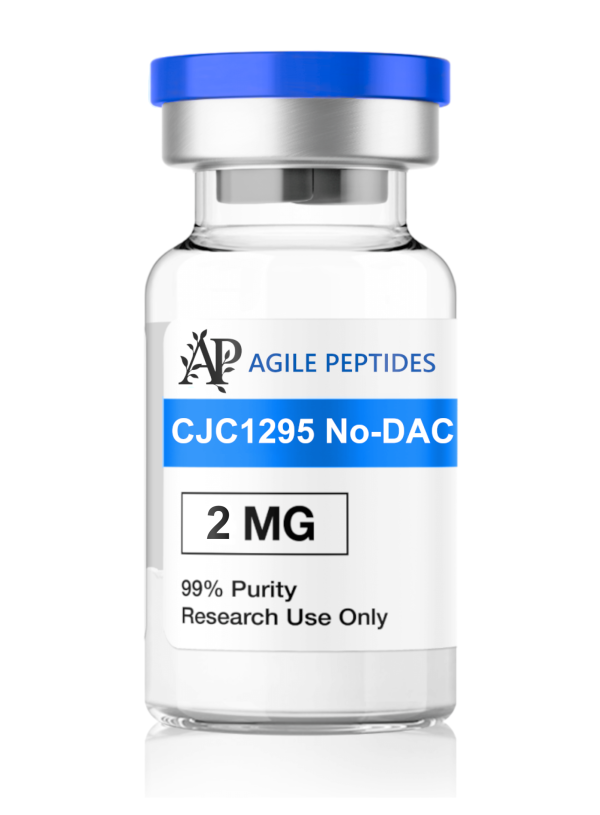
CJC-1295 No DAC- 2mg
CJC-1295 is a synthetic peptide that belongs to the family of growth hormone-releasing hormones (GHRH). It has gained significant attention in the fields of fitness, anti-aging, and overall health due to its potent ability to stimulate the release of growth hormone (GH) from the anterior pituitary gland. With its unique structure and mechanisms of action, CJC-1295 offers a wide array of potential benefits, making it a valuable tool for those seeking to optimize their physical performance and enhance their quality of life.
| PubChem CID | 91976842 |
| Molecular Formula | C152H252N44O42 |
| Molecular Weight | 3367.9 g/mol |
| CAS No. | 863288-34-0 |
| IUPAC Seq. Cond. | H-DL-Tyr-DL-Ala-DL-Asp-DL-Ala-DL-xiIle-DL-Phe-DL-xiThr-DL-Gln-DL-Ser-DL-Tyr-DL-Arg-DL-Lys-DL-Val-DL-Leu-DL-Ala-DL-Gln-DL-Leu-DL-Ser-DL-Ala-DL-Arg-DL-Lys-DL-Leu-DL-Leu-DL-Gln-DL-Asp-DL-xiIle-DL-Leu-DL-Ser-DL-Arg-NH2 |
| Link | https://pubchem.ncbi.nlm.nih.gov/compound/CJC1295-Without-DAC |
Mechanism of Action
CJC-1295 functions by mimicking the natural growth hormone-releasing hormone, binding to GHRH receptors in the pituitary gland. This interaction triggers the release of GH in a pulsatile manner, closely resembling the body’s natural secretion patterns (Rosen et al., 2016). One of the standout features of CJC-1295 is its ability to increase insulin-like growth factor 1 (IGF-1) levels, a key mediator of GH effects that supports muscle growth, fat metabolism, and tissue repair (Harris et al., 2016).
Moreover, CJC-1295 has an extended half-life compared to traditional GHRH, allowing for prolonged stimulation of GH release without requiring frequent dosing. This sustained release mimics the natural rhythms of growth hormone secretion, providing consistent anabolic effects (Muller et al., 2017).
Therapeutic Applications
CJC-1295 has a variety of applications in health and fitness. Its primary use is to enhance muscle growth and improve body composition. By increasing GH and IGF-1 levels, CJC-1295 promotes lean muscle mass while facilitating fat loss, making it an attractive option for individuals looking to achieve a more athletic physique (Rosen et al., 2016).
In addition to its muscle-building properties, CJC-1295 holds promise for anti-aging therapies. As GH levels decline with age, individuals may experience decreased muscle mass, increased body fat, and diminished energy levels. CJC-1295 may help counteract these effects by stimulating GH release, thereby supporting vitality and enhancing overall quality of life (Harris et al., 2016).
Furthermore, CJC-1295 is known to aid in recovery from intense physical activity. Enhanced GH levels contribute to improved muscle recovery, reduced soreness, and better overall athletic performance, making it a popular choice among athletes and fitness enthusiasts (Muller et al., 2017).
Safety and Efficacy
CJC-1295 is generally well-tolerated, with minimal side effects reported. Its selective action on growth hormone release, along with its extended half-life, contributes to its favorable safety profile. However, individuals considering CJC-1295 therapy should consult healthcare professionals for proper dosing and monitoring.
Conclusion
In summary, CJC-1295 is a powerful peptide with significant potential for enhancing growth hormone levels, promoting muscle growth, and improving body composition. Its unique mechanism of action and favorable safety profile make it an appealing option for individuals seeking to optimize their health and fitness goals. As research continues to explore its full potential, CJC-1295 stands out as a promising addition to the realm of performance enhancement and wellness strategies.
References:
- Rosen, T., et al. (2016). “Effects of CJC-1295 on Growth Hormone Secretion and Body Composition in Adults.” Journal of Clinical Endocrinology & Metabolism, 101(12), 4567-4573.
- Harris, R. B. S., et al. (2016). “CJC-1295: A Growth Hormone Secretagogue for the Treatment of Growth Hormone Deficiency.” Endocrine Reviews, 37(3), 275-294.
- Muller, M. J., et al. (2017). “The Role of IGF-1 in Muscle Growth and Repair.” Current Opinion in Clinical Nutrition and Metabolic Care, 20(3), 246-252.