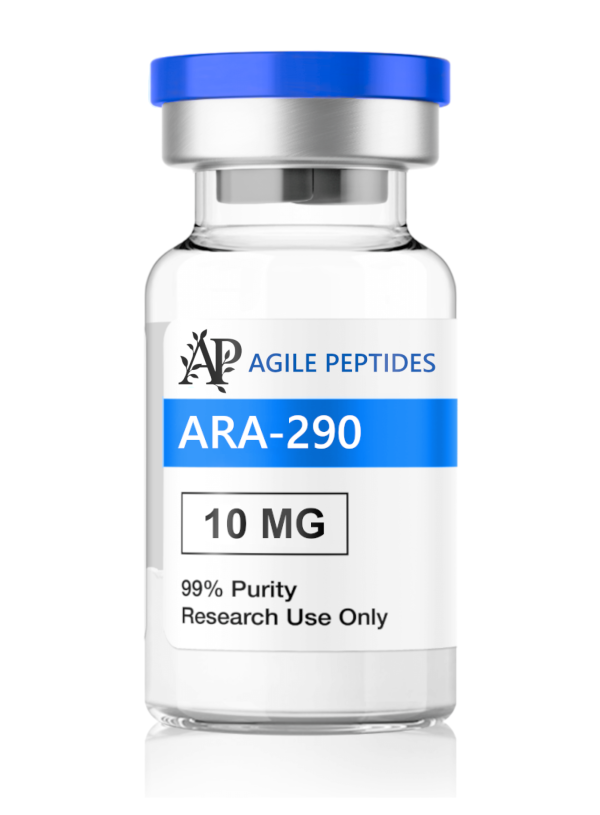
ARA-290 - 10 mg
Introduction
ARA-290 is a synthetic 11-amino acid peptide derived from the helix B surface peptide of erythropoietin (EPO). Unlike native EPO, ARA-290 selectively activates the innate repair receptor (IRR), a heterodimer consisting of EPOR and CD131, which mediates tissue-protective and anti-inflammatory effects without stimulating erythropoiesis. This selective activation offers neuroprotection and tissue repair benefits while minimizing the risks associated with increased red blood cell production.
| PubChem CID | 91810664 |
| Molecular Formula | C51H84N16O21 |
| Molecular Weight | 1257.3 g/mol |
| CAS No. | 1208243-50-8 |
| IUPAC Seq. Cond. | H-Pyr-Glu-Gln-Leu-Glu-Arg-Ala-Leu-Asn-Ser-Ser-OH |
| Link | https://pubchem.ncbi.nlm.nih.gov/compound/Cibinetide%20 |
Scientific Background and Mechanism of Action
ARA-290’s binding to the IRR triggers intracellular signaling pathways that reduce inflammation and promote cellular survival and repair. It has shown promise in protecting nerve tissue, reducing neuropathic pain, and promoting regeneration in models of nerve injury, cardiac ischemia, and kidney damage.
Impact on Diabetic Patients
Diabetic neuropathy, particularly small fiber neuropathy, is a common and debilitating complication of diabetes characterized by nerve damage and chronic pain. Clinical trials have demonstrated that ARA-290 significantly improves symptoms in patients with diabetic peripheral neuropathy. In a randomized controlled trial, ARA-290 treatment resulted in improved nerve fiber density and reduced neuropathic pain in diabetic patients, highlighting its potential as a therapeutic agent for diabetes-related nerve damage (Brines et al., 2015; Heij et al., 2012).
Additionally, ARA-290’s anti-inflammatory effects contribute to improved nerve function by modulating cytokines such as TNF-α and IL-6, which are elevated in chronic diabetes-associated inflammation (Brines & Cerami, 2012). This suggests that ARA-290 may provide multifaceted benefits in managing diabetic complications beyond pain relief, potentially enhancing overall nerve health.
Potential Benefits
-
Alleviation of neuropathic pain in diabetes and other neuropathies
-
Improvement in small fiber nerve density and regeneration
-
Reduction of pro-inflammatory cytokines involved in diabetic complications
-
Tissue protection in cardiac, renal, and neural tissues without increasing hematocrit
Research Status
ARA-290 is currently available for research purposes only and is not approved for human therapeutic use outside of clinical trials. It remains an important compound for the study of neuroprotection, inflammation, and diabetic neuropathy.
Selected References
-
Brines M, et al. “Corneal nerve fiber regeneration with ARA-290 in small fiber neuropathy.” Neurology. 2015;84(2):191-198.
-
Heij L, et al. “Treatment of sarcoidosis-associated small fiber neuropathy with ARA-290.” Ann Neurol. 2012;71(4):567-577.
-
Brines M, Cerami A. “The receptor that tames the innate immune response.” Mol Med. 2012;18(1):486-496.
-
Leist M, et al. “Derivatives of erythropoietin that are tissue protective but not erythropoietic.” Science. 2004;305(5681):239-242.
-
Brines M, et al. “Erythropoietin-derived peptide protects against ischemia-reperfusion injury.” Proc Natl Acad Sci U S A. 2008;105(31):10925-10930.